Byla Nr. 028 iš 446
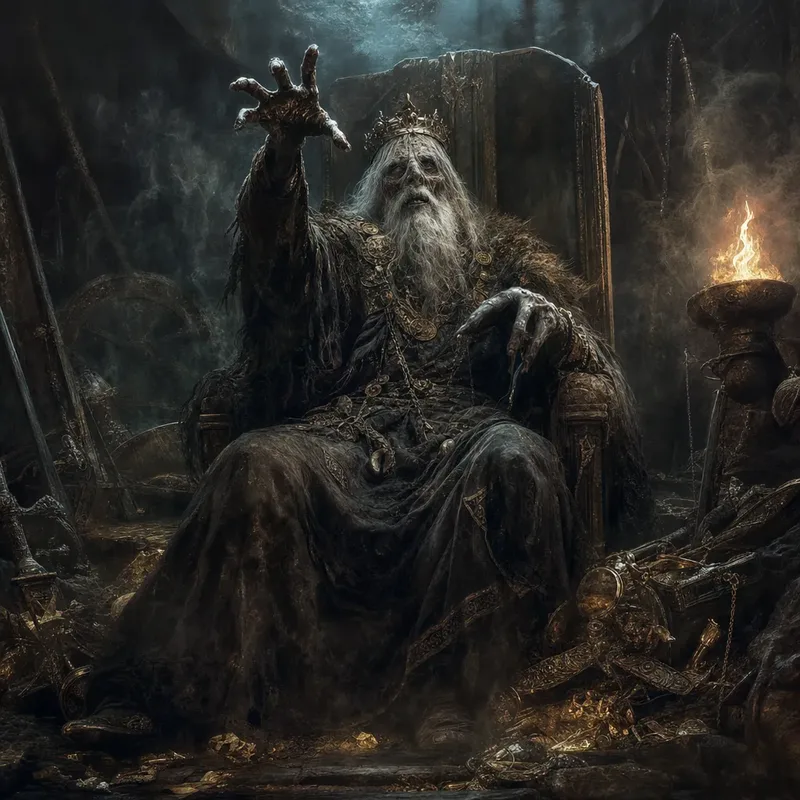
Kárr the Old
Taip pat vadinamas: Kárr inn gamli, Kar the Old
Kárr the Old is the barrow-dweller the young Grettir robs during his first voyage to Norway. He is a textbook haugbúi: he does not roam, but when the mound is broken open he grapples with the intruder until Grettir throws him and strikes off his head. The scene set the pattern for the 'hero versus tomb guardian' fight that fantasy fiction and games still reuse.123
Pirmasis įrašas
1300
Grettis saga, chapter 18; the saga reached its present form in the 14th centuryKilmė
Norse (Icelandic saga)
Norvegija, IslandijaKas jį sukelia
Kita
A dead man who goes on occupying his barrow and defending his grave goods.Kaip tampi vienu iš jų
Buried in a mound with his wealth, he persists there as its guardian.
Kaip jis juda
Vos juda
Stays in his mound and seizes Grettir when the hero breaks in for the treasure.Intelektas
Šiek tiek intelekto
Silpnosios vietos
- beheading with the sword Jökulsnautr
Kada jis pirmą kartą pasirodė?
Senovės pasaulis
Viduramžiai
1500–1899
1900–1967
1968–1999
2000–2009
Nuo 2010 iki šiol
 1300
1300Grettis saga, chapter 18; the saga reached its present form in the 14th century
lauko užrašai
Ką sako šaltiniai
Šaltiniai
- Grettis saga - Wikipedia
- Draugr - Wikipedia
- Viking zombies and how to kill them - University of Liverpool News
Kiekvienas šio puslapio faktas paimtas iš šių šaltinių ir perrašytas mūsų žodžiais. Pastebėjai klaidą? Rašyk mums adresu hello@zombiewiki.app.
 Draugr
 Glámr
Glámr Asvith
 Deacon of Myrká
 Gjenganger
 Haugbúi
 Vetala
 Revenant (medieval England)
 Upiór
Upiór Berwick revenant
 Buckinghamshire revenant
 Byland Abbey revenants