Dossier nr. 028 van 446
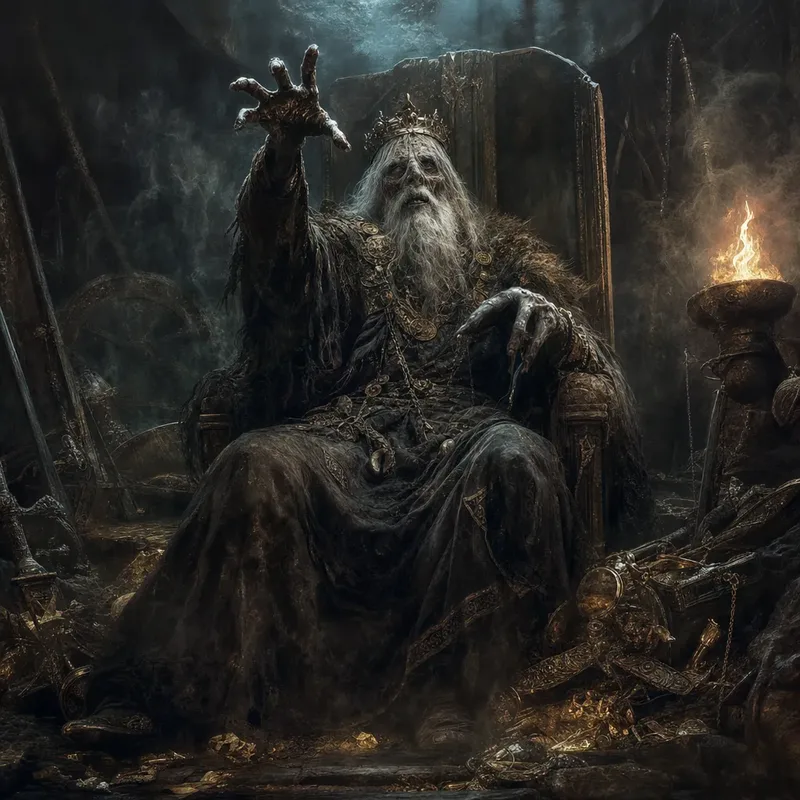
Kárr the Old
Ook wel genoemd: Kárr inn gamli, Kar the Old
Kárr the Old is the barrow-dweller the young Grettir robs during his first voyage to Norway. He is a textbook haugbúi: he does not roam, but when the mound is broken open he grapples with the intruder until Grettir throws him and strikes off his head. The scene set the pattern for the 'hero versus tomb guardian' fight that fantasy fiction and games still reuse.123
Eerst vastgelegd
1300
Grettis saga, chapter 18; the saga reached its present form in the 14th centuryHerkomst
Norse (Icelandic saga)
Noorwegen, IJslandWat het veroorzaakt
Overig
A dead man who goes on occupying his barrow and defending his grave goods.Hoe je er een wordt
Buried in a mound with his wealth, he persists there as its guardian.
Hoe hij beweegt
Beweegt amper
Stays in his mound and seizes Grettir when the hero breaks in for the treasure.Intelligentie
Enige intelligentie
Zwakke plekken
- beheading with the sword Jökulsnautr
Wanneer verscheen hij voor het eerst?
Oudheid
Middeleeuwen
1500 tot 1899
1900 tot 1967
1968 tot 1999
2000 tot 2009
2010 tot nu
 1300
1300Grettis saga, chapter 18; the saga reached its present form in the 14th century
veldnotities
Wat de bronnen zeggen
Bronnen
- Grettis saga - Wikipedia
- Draugr - Wikipedia
- Viking zombies and how to kill them - University of Liverpool News
Elk feit op deze pagina komt uit deze bronnen, in eigen woorden geschreven. Een fout gezien? Mail ons op hello@zombiewiki.app.
 Draugr
 Glámr
Glámr Asvith
 Deacon of Myrká
 Gjenganger
 Haugbúi
 Vetala
 Revenant (medieval England)
 Upiór
Upiór Berwick revenant
 Buckinghamshire revenant
 Byland Abbey revenants